Potential Energy & Equilibrium - NEET Physics Questions
← Back to Work Energy and Power

Potential Energy & Equilibrium

Question 11: difficult

If Potential energy is given by U = (x³ + y³ + z²). Calculate force at a point (3, 2, 1) :

1.
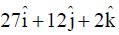
2.
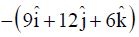
3.
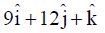
4.
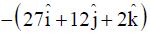
View Answer
Question 12: moderate

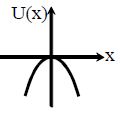
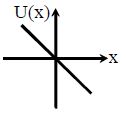
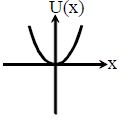
A particle is placed at the origin and a force F = kx is acting on it (where k is positive constant). If U(0) = 0, the graph of U(x) versus x will be (where U is the potential energy function) :

1.
2.
3.
4.
View Answer
Question 13: easy

A particle with constant total energy \( E \) moves in one dimension in a region where the potential energy is represented by \( U(x) \). The speed of the particle is zero where:

1. \( \frac{d^2U(x)}{dx^2} = 0 \)
2. \( \frac{dU(x)}{dx} = 0 \)
3. \( U(x) = E \)
4. \( U(x) = 0 \)
View Answer

Total mechanical energy of a particle is the sum of its kinetic energy and potential energy: \( E = K + U(x) \). When the speed of the particle is zero, its kinetic energy \( K = 0 \), which gives \( E = U(x) \).