LR, RC and LCR Circuits - NEET Physics Questions
← Back to Alternating Current

LR, RC and LCR Circuits

Question 1: easy

In pure inductive circuit, the curves between frequency f and reciprocal of inductive reactance 1/XL is :

1.
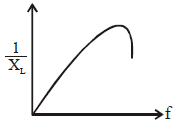
2.
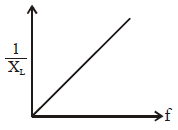
3.
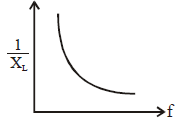
4.
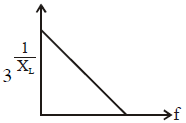
View Answer
Question 2: easy

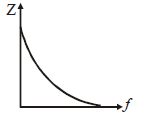
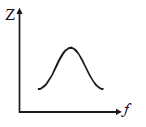
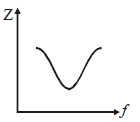
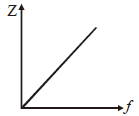
Which one of the following curves represents the variation of impedence (Z) with frequency f in series LCR circuit :-

1.
2.
3.
4.
View Answer
Question 3: easy

In series LCR circuit voltage across L, C & R is 20V each. If capacitor is short-circuited then
voltage across inductor is :

1. 20 V
2. 20√2  V
3. 10√2  V
4. 10 V
View Answer
Question 4: easy

A variable inductor is connected to an ac source. What effect does increasing the inductance have on the reactance and current in this circuit ?


1. Reactance - Decreases, Current - No change
2. Reactance - Increases, Current - Increases
3. Reactance - Decreases, Current - Increases
4. Reactance - Increases, Current - Decreases
View Answer
Question 5: easy

A variable capacitor is connected to an ac source. What effect does decreasing the capacitance have on the reactance and current in this circuit ?

1. Reactance - Decreases, Current - No change
2. Reactance - Increases, Current - Increases
3. Reactance - Decreases, Current -Increases
4. Reactance - Increases, Current -Decreases
View Answer
Question 6: easy

Given below are two statements :
Statement I : In an LCR series circuit, current is maximum at resonance.
Statement II : Current in a purely resistive circuit can never be less than that in a series LCR circuit (using same resistance) when connected to same voltage source.
In the light of the above statements, choose the correct from the options given below :

1. Statement I is true but Statement II is false
2. Statement I is false but Statement II is true
3. Both Statement I and Statement II are true
4. Both Statement I and Statement II are false
View Answer

At resonance, impedance of an LCR circuit is minimum and equal to \(R\), so current is maximum. In general, impedance \(Z ge R\), hence the current \(I = V/Z\) is less than or equal to the purely resistive current \(V/R\). Thus, both statements are true.

Question 7: easy

The maximum power is dissipated for an ac in a/an

1. Inductive circuit
2. Capacitive circuit
3. Resistive circuit
4. LC circuit
View Answer

The average power dissipated is \(P = V_{\text{rms}} I_{\text{rms}} cos \phi\). For a purely resistive circuit, the phase angle \(\phi = 0\), which gives the maximum power factor \(cos \phi = 1\).

Question 8: easy

In LCR series circuit the values of \(L\), \(C\), \(R\) and \(E_0\) are \(0.01\text{ H}\), \(10^{-5}\text{ F}\), \(25\ \Omega\) and \(220\text{ V}\) respectively. The value of current flowing in the circuit at \(f = 0\) and \(f = \infty\) will respectively be:

1. \(8\text{ A}\) and \(0\text{ A}\)
2. \(0\text{ A}\) and \(0\text{ A}\)
3. \(8\text{ A}\) and \(8\text{ A}\)
4. \(0\text{ A}\) and \(8\text{ A}\)
View Answer

At \(f = 0\), the capacitor acts as an open circuit (\(X_C = \infty\)). At \(f = \infty\), the inductor acts as an open circuit (\(X_L = \infty\)). Therefore, current is zero in both cases.

Question 9: easy

A bulb and a capacitor are connected in series to a source of alternating current. If its frequency is increased, while keeping the voltage of the source constant, then:

1. Bulb will give more intense light
2. Bulb will give less intense light
3. Bulb will give light of same intensity as before
4. Bulb will stop radiating light
View Answer

As frequency increases, capacitive reactance \(X_C = \frac{1}{2\pi f C}\) decreases. This decreases the total impedance \(Z = \sqrt{R^2 + X_C^2}\), thereby increasing the current, causing the bulb to glow more brightly.

Question 10: easy

The phase difference between voltage and current in series LCR circuit at half power frequency is:

1. \(0\)
2. \(\pi/4\)
3. \(\pi/2\)
4. \(\pi\)
View Answer

At half-power frequencies, the power factor is \(\cos\phi = \frac{1}{\sqrt{2}}\), which gives \(\phi = \pi/4\).