Wave Optics - NEET Physics Questions
← All Chapters

Wave Optics

Question 1: easy

In a standard Young’s double slit setup, we get 60 fringes on a section of screen with
monochromatic light of wavelength 4000 Å. If we use monochromatic light of wavelength 6000Å, then the number of fringes that would be obtained in the same section is
1. 60
2. 90
3. 40
4. 1.5
View Answer
Question 2: easy

Two coherent sources of light can be obtained by :

1. Two different lamps
2. Two different lamps but of the same power
3. Two different lamps of same power and having the same colour
4. None of the above
View Answer
Question 3: easy

Two identical light waves, propagating in the same direction, have a phase difference δ. After they superpose, the intensity of the resulting wave will be proportional to :

1. cos δ
2. cos (δ/2)
3. cos² (δ/2)
4. cos² δ
View Answer
Question 4: easy

If the amplitude ratio of two sources producing interference is 3 : 5, the ratio of intensities at maxima and minima is :

1. 25 : 16
2. 5 : 3
3. 16 : 1
4. 25 : 9
View Answer
Question 5: easy

Consider Fraunhoffer diffraction pattern obtained with a single slit at normal incidence. At the angular position of first diffraction minimum, the phase difference between the wavelets from the opposite edges of the slit is :

1. π/4
2. π/2
3. π
4.
View Answer
Question 6: easy

A single slit of width 0.20 mm is illuminated with light of wavelength 500 nm. The observing screen is placed 80 cm from the slit. The width of the central bright fringe will be :

1. 1 mm
2. 2 mm
3. 4 mm
4. 5 mm
View Answer
Question 7: easy

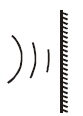
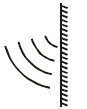
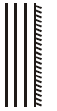
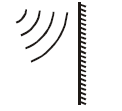
Spherical wavefronts shown in fig, strike a plane mirror. Reflected wavefronts will be as shown in:

1.
2.
3.
4.
View Answer
Question 8: easy

The first diffraction minimum due to a single slit diffraction is at θ = 30° for a light of wavelength 5000Å. The width of the slit is :

1. \[5\times 10^{-5} cm\]
2. \[1.0\times 10^{-4} cm\]
3. \[2.5\times 10^{-5} cm\]
4. \[1.25\times 10^{-5} cm\]
View Answer